


Page 8 - ENT 2026 e-program book final
P. 8
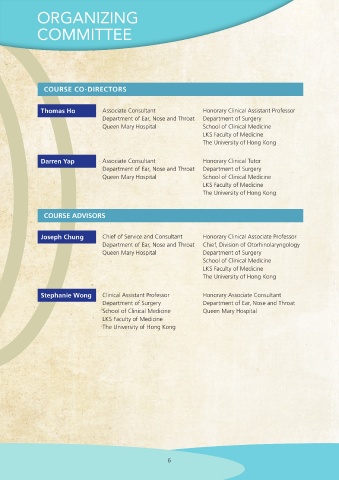
ORGANIZING
TAKE CONTROL
COMMITTEE
OF RECURRENT
COURSE CO-DIRECTORS
NASAL POLYPS
Thomas Ho Associate Consultant Honorary Clinical Assistant Professor
Department of Ear, Nose and Throat Department of Surgery
Queen Mary Hospital School of Clinical Medicine
LKS Faculty of Medicine 1
The University of Hong Kong WITH NUCALA
Darren Yap Associate Consultant Honorary Clinical Tutor
Department of Ear, Nose and Throat Department of Surgery THE ONLY ANTI-IL-5 APPROVED FOR NASAL
Queen Mary Hospital School of Clinical Medicine POLYPS 2
LKS Faculty of Medicine
The University of Hong Kong
THE ONLY BIOLOGIC EXCLUSIVELY STUDIED
COURSE ADVISORS IN PATIENTS WITH ≥1 PREVIOUS NASAL
SURGERY 1,3-5
• Over 5X reduction in median nasal obstruction VAS
Joseph Chung Chief of Service and Consultant Honorary Clinical Associate Professor score vs. placebo (-0.82 vs -4.41, treatment difference
-3.14, 95% CI -4.09 to -2.18, adjusted p<0.0001)* .
1
Department of Ear, Nose and Throat Chief, Division of Otorhinolaryngology • 69% reduction in need for surgery vs. placebo in
Queen Mary Hospital Department of Surgery patients with ≥300 eosinophils/L. 5
School of Clinical Medicine • 73% (n=150) of patients experienced improvement
LKS Faculty of Medicine in HRQoL. 1
The University of Hong Kong
Stephanie Wong Clinical Assistant Professor Honorary Associate Consultant
Department of Surgery Department of Ear, Nose and Throat
School of Clinical Medicine Queen Mary Hospital HRQoL, health-related quality of life; VAS, visual analogue scale
LKS Faculty of Medicine SYNAPSE was a randomized, double-blind, placebo-controlled, parallel-group, multicenter phase 3 trials enrolling 407 adults with recurrent, refractory, severe, bilateral nasal polyp
symptoms assigned to receive either mepolizumab or placebo. The co-primary endpoints, change from baseline in total endoscopic nasal poly score at 52 week and mean nasal obstruction
1
The University of Hong Kong VAS score during weeks 49-52, were met (p<0.0001 for both endpoints). Treatment-related AEs were reported in 15% and 9% of patients receiving mepolizumab and placebo, respectively.
Nucala (mepolizumab) for injection in pre-filled pen is indicated as an add-on therapy for adult patients with inadequately controlled hypereosinophilic syndrome (HES) without an
identifiable non-haematologic secondary cause. Nucala is also indicated as an add-on therapy for severe eosinophilic asthma (SEA), adults with severe CRSwNP for whom therapy
with systemic corticosteroids and/or surgery do not provide adequate disease control, and eosinophilic granulomatosis with polyangiitis (EGPA). 2
Important Safety Information • Nucala (mepolizumab) 100 mg solution for injection in pre-filled pen Contraindications: • Hypersensitivity to the active
2
substance or to any excipients of Nucala solution for injection. Warnings and Precautions: • Not to be used to treat acute asthma exacerbations.
Asthma-related adverse symptoms or exacerbations may occur during treatment. • Abrupt discontinuation of corticosteroids after initiation of Nucala
therapy is not recommended. • Acute and delayed systemic reactions, including hypersensitivity reactions (e.g. anaphylaxis, urticaria, angioedema, rash,
bronchospasm, hypotension), have occurred following administration of Nucala. • In the event of a hypersensitivity reaction, appropriate treatment as clinically
indicated should be initiated. • Pre-existing helminth infections should be treated before starting Nucala. • Nucala has not been studied in patients with organ
threatening or life-threatening manifestations of EGPA • Nucala has not been studied in patients with life-threatening manifestations of HES. Adverse Events:
Most commonly reported adverse reactions in: • Severe eosinophilic asthma: headache, injection site reactions and back pain. • CRSwNP: headache and
back pain. • EGPA: headache, injection site reactions and back pain • HES: headache, urinary tract infection, injection site reactions and pyrexia.
REFERENCES: 1. Han JK, Bachert C, Fokkens W, et al. Mepolizumab for chronic rhinosinusitis with nasal polyps (SYNAPSE): a randomised, double-blind,
placebo-controlled, phase 3 trial. Lancet Respir Med. 2021;9(10):1141–1153. 2. Nucala (mepolizumab) 100mg solution for injection in pre-filled pen Hong Kong Full
Prescribing Information. Version HK112021 (GDS14/EMA20211112) 3. Bachert C, Han JK, Desrosiers MY, et al. Ecacy and safety of benralizumab in chronic
rhinosinusitis with nasal polyps: A randomized, placebo-controlled trial. J Allergy Clin Immunol. 2022;149(4):1309–1317.e12. 4. Gevaert P, Omachi TA, Corren J, et al.
Ecacy and safety of omalizumab in nasal polyposis: 2 randomized phase 3 trials. J Allergy Clin Immunol. 2020;146(3):595–605. 5. Bachert C, Han JK, Desrosiers
M, et al. Ecacy and safety of dupilumab in patients with severe chronic rhinosinusitis with nasal polyps (LIBERTY NP SINUS-24 and LIBERTY NP SINUS-52): results
from two multicentre, randomised, double-blind, placebo-controlled, parallel-group phase 3 trials. Lancet. 2019;394:1638–1650.
Please read the full The material is for the reference and use by Hong Kong healthcare professionals only. Unless noted, images and patient profiles are for illustrative purposes only.
prescribing information For adverse event reporting, please call GlaxoSmithKline Limited at (852) 3189 8989 (Hong Kong), or report via online Patient safety reporting form:
prior to administration.
Full prescribing https://gsk.public.reportum.com/. Trademarks are owned by or licensed to the GSK group of companies.
information is available ©2025 GSK group of companies or its licensor.
upon request.
GlaxoSmithKline Limited Suites 1004-10, 10/F, Tower 6, The Gateway, 9 Canton Road, Tsim Sha Tsui, Kowloon, Hong Kong Tel: (852) 3189 8989
6
PM-HK-MPL-ADVR-250001 (10/2027) Date of preparation: 11/2025

